
The animation below alternates between 2012 and 2013 ice which is at least 1.5 metres thick. There has been a huge increase in thick ice, and by next spring, most of that region will be more than three metres thick, of thin rotten decayed ice.
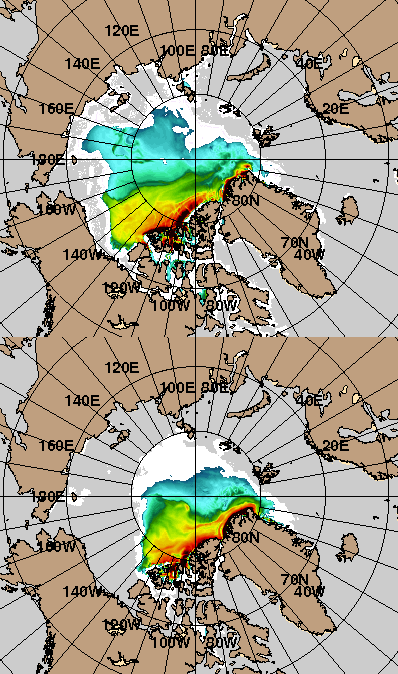
The animation below alternates between 2012 and 2013 ice which is at least 1.5 metres thick. There has been a huge increase in thick ice, and by next spring, most of that region will be more than three metres thick, of thin rotten decayed ice.


 | saveenergy on Cattle And The Climate |
 | gelcarrion0t on New Video : Analyzing Oil And… |
| saveenergy on Is Antarctica Melting? |
| saveenergy on 65 Years Of Progress! |
 | Jeff L. on Analyzing The Western Water Cr… |
 | Morgan Wright on Great Lakes Approaching 100% I… |
| Morgan Wright on Great Lakes Set Another Spring… |
| gelcarrion0t on New Visitech Features |
| saveenergy on Ice-Free Arctic By 2014 |
| gelcarrion0t on Ice-Free Arctic By 2014 |
No hurricanes, low tornado count, massive ice recover in the Arctic.
2013, the year that alarmists heads exploded trying (and failing) to explain it all away.
Reblogged this on Health Science Watch.
It you draw a line running north from the top of Greenland, through the north pole and extend it to the Siberian coast you can approximate the portion of the ice pack most susceptible to being moved into warm waters by the transpolar drift. The region to the Atlantic side of that line is likely to get routed to the Barents Sea or down the Fram Strait to melt in the Atlantic. The region to the Beaufort Sea side of the line is likely to recirculate in the Beaufort Gyre and thus stick around for a few years. The percentage of MYI on the Gyre side of the ice pack is much greater than any of the post-2006 years and suggests that this rebound from the recent ice area lows has the potential to be a new multi-year trend.